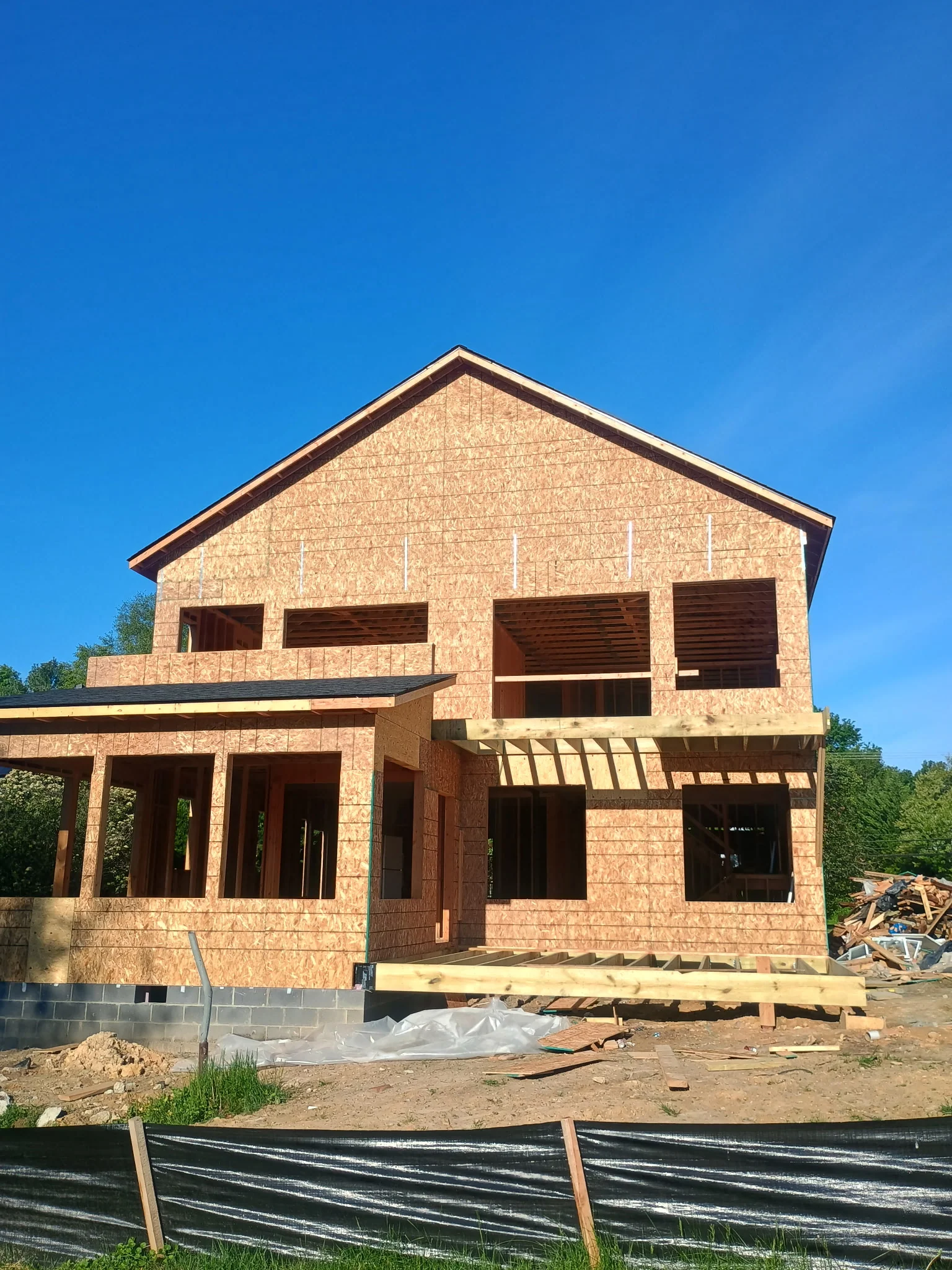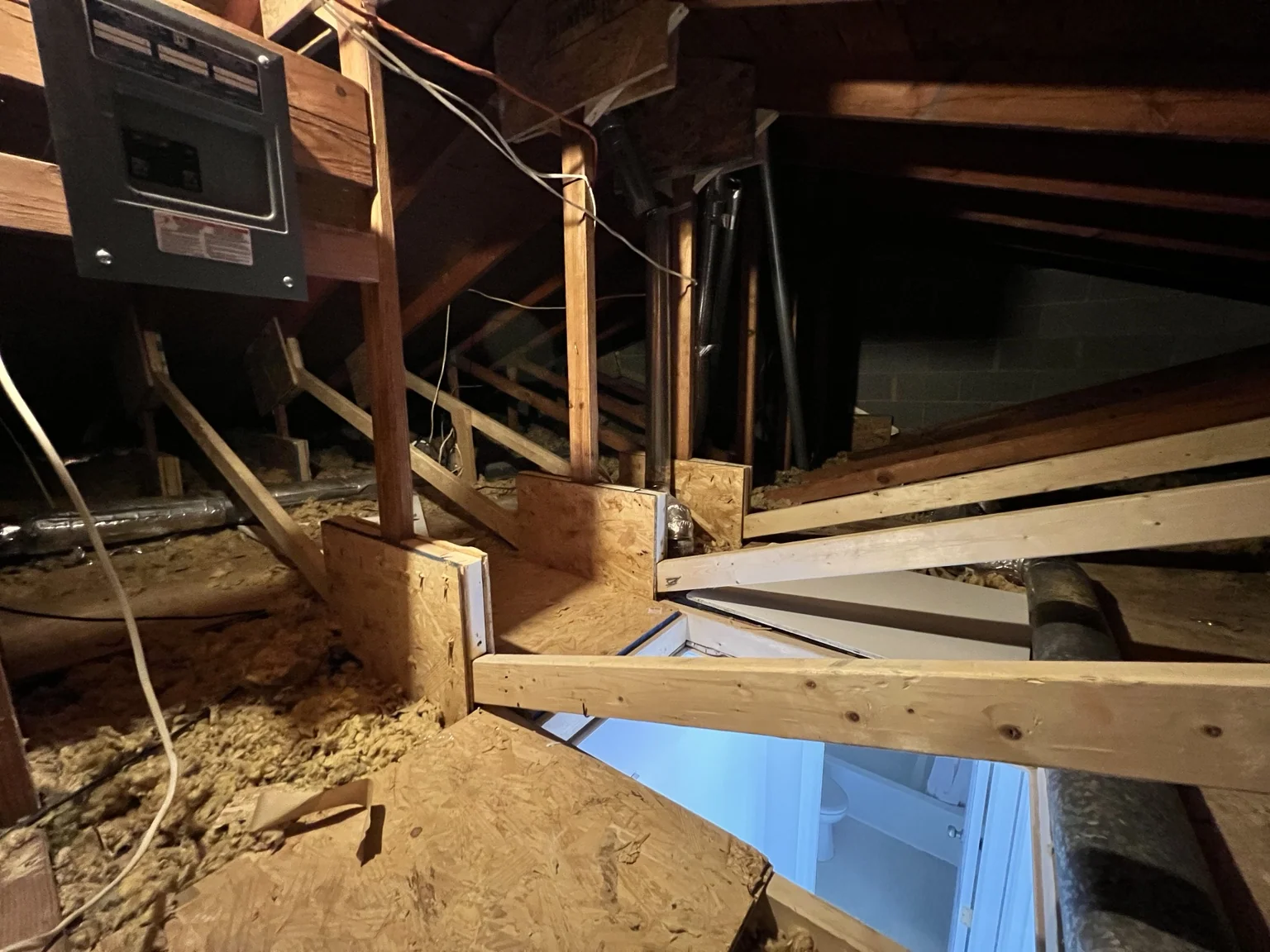
Smooth walls. A clearer construction process.
Drywall is one of the most visible parts of an interior renovation, but the finished wall depends on careful work well before paint. New partitions, ceiling changes, repairs and openings all require decisions about backing, board selection, joints and surface finish.
The photo on this page shows a genuine residential drywall-finishing stage: taped joints, compound application and areas still being prepared for a final surface. It is a construction-stage example, not a finished-room photograph or a representation that RENOVA held the original contract.
For homeowners in Fairfax and surrounding Northern Virginia communities, a clear drywall scope should describe what will be installed or repaired, the expected finish level, any moisture-resistant or fire-rated assemblies that apply, and what is included in painting and cleanup.
What the work may involve
- New drywall installation for interior walls, ceilings and renovation areas.
- Drywall patching and repairs following permitted trade work, openings or localized damage.
- Taping, joint compound, corner finishing, sanding and preparation for primer or paint.
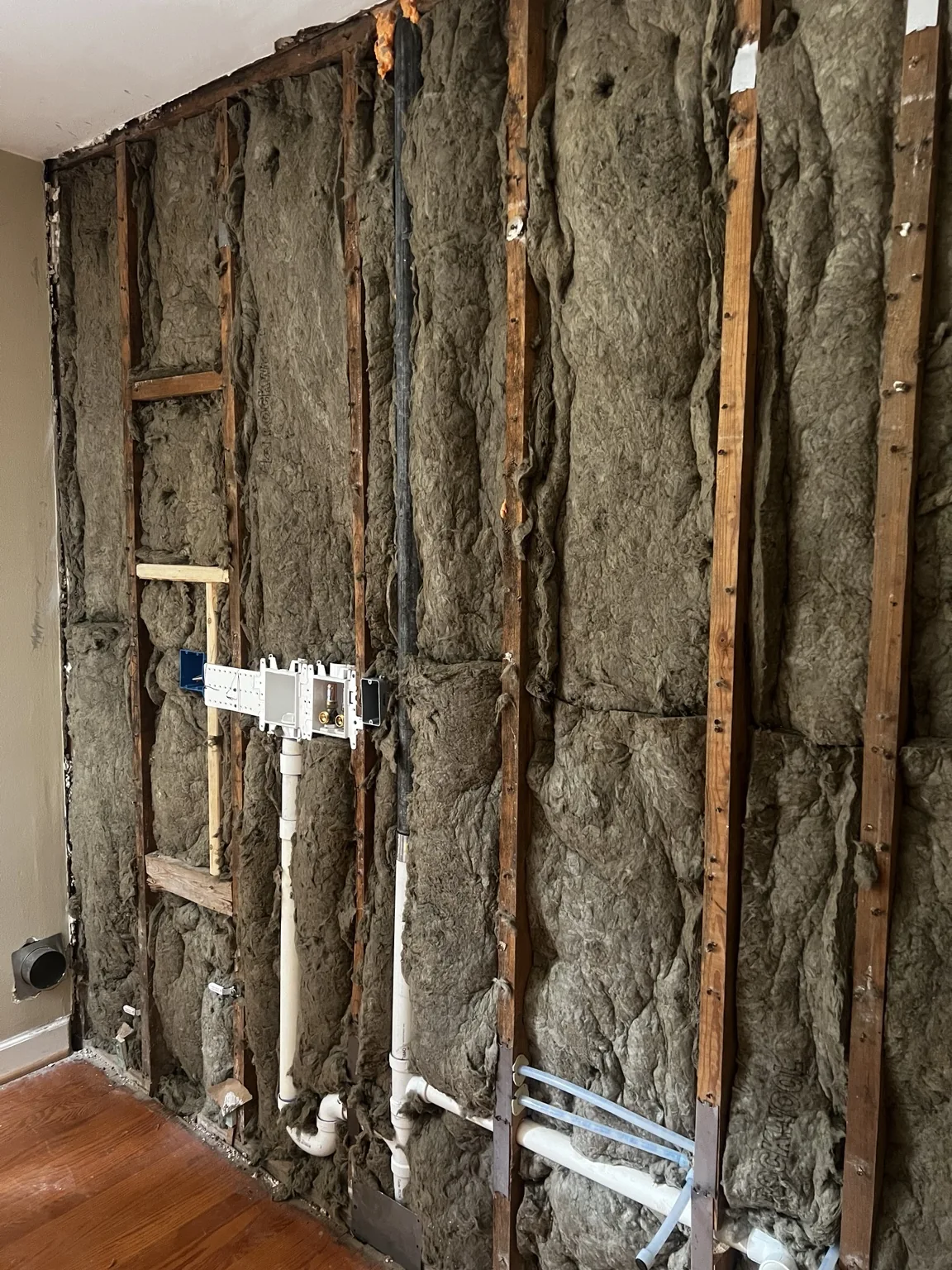
- Coordination with framing, insulation, electrical and plumbing work before wall cavities are closed.
- Discussion of protection, dust management, inspection hold points and final walkthrough expectations.
Planning considerations
Ask whether the proposal includes hanging board, taping, sanding, primer, painting, texture matching, debris removal and return visits. A drywall quote may include only some of these steps.
Moisture damage must be investigated and its cause addressed before a wall is closed. Where a rated wall or ceiling assembly is required, the materials and installation must meet the applicable specifications; a finish coat alone does not establish compliance.
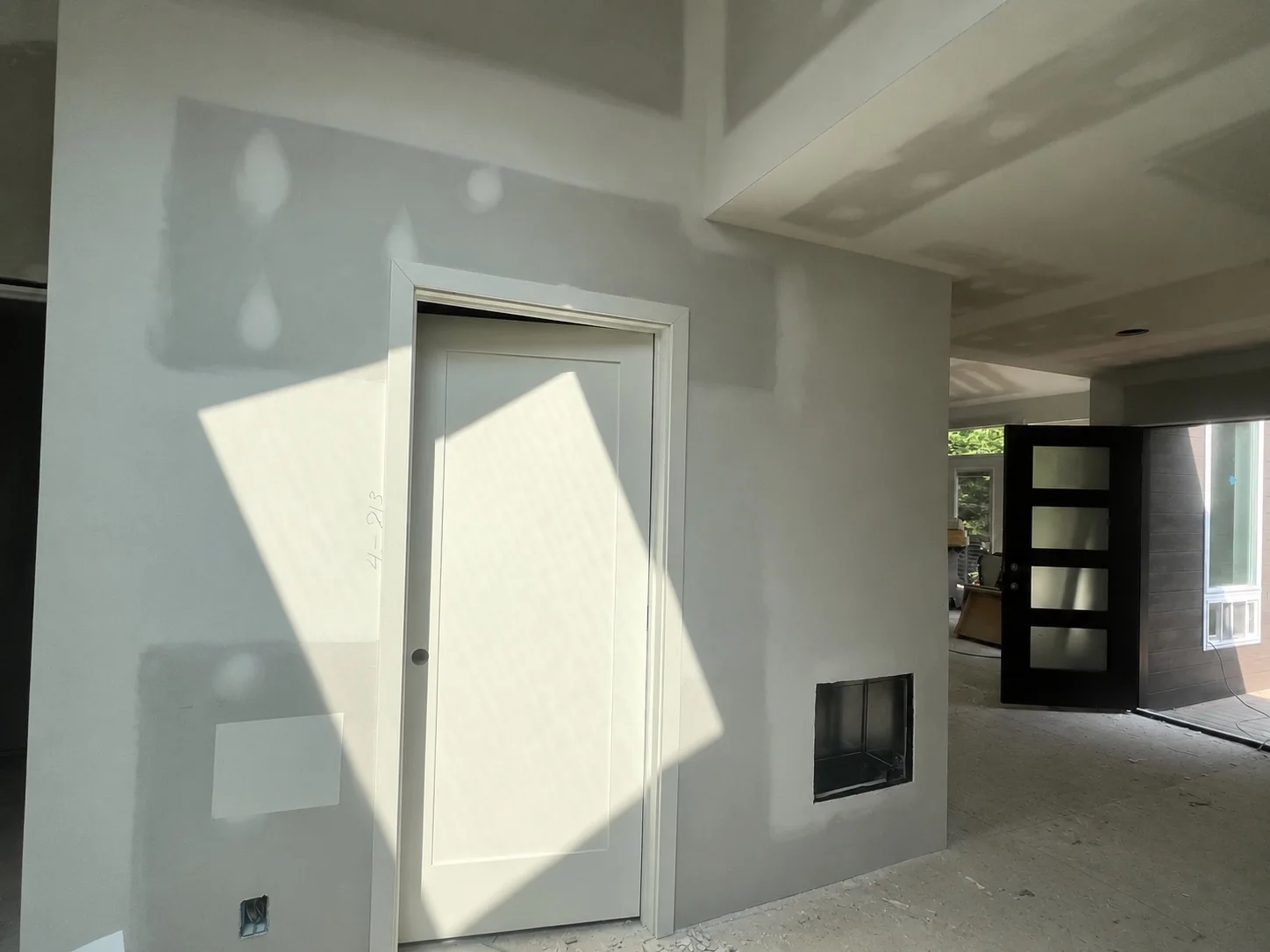
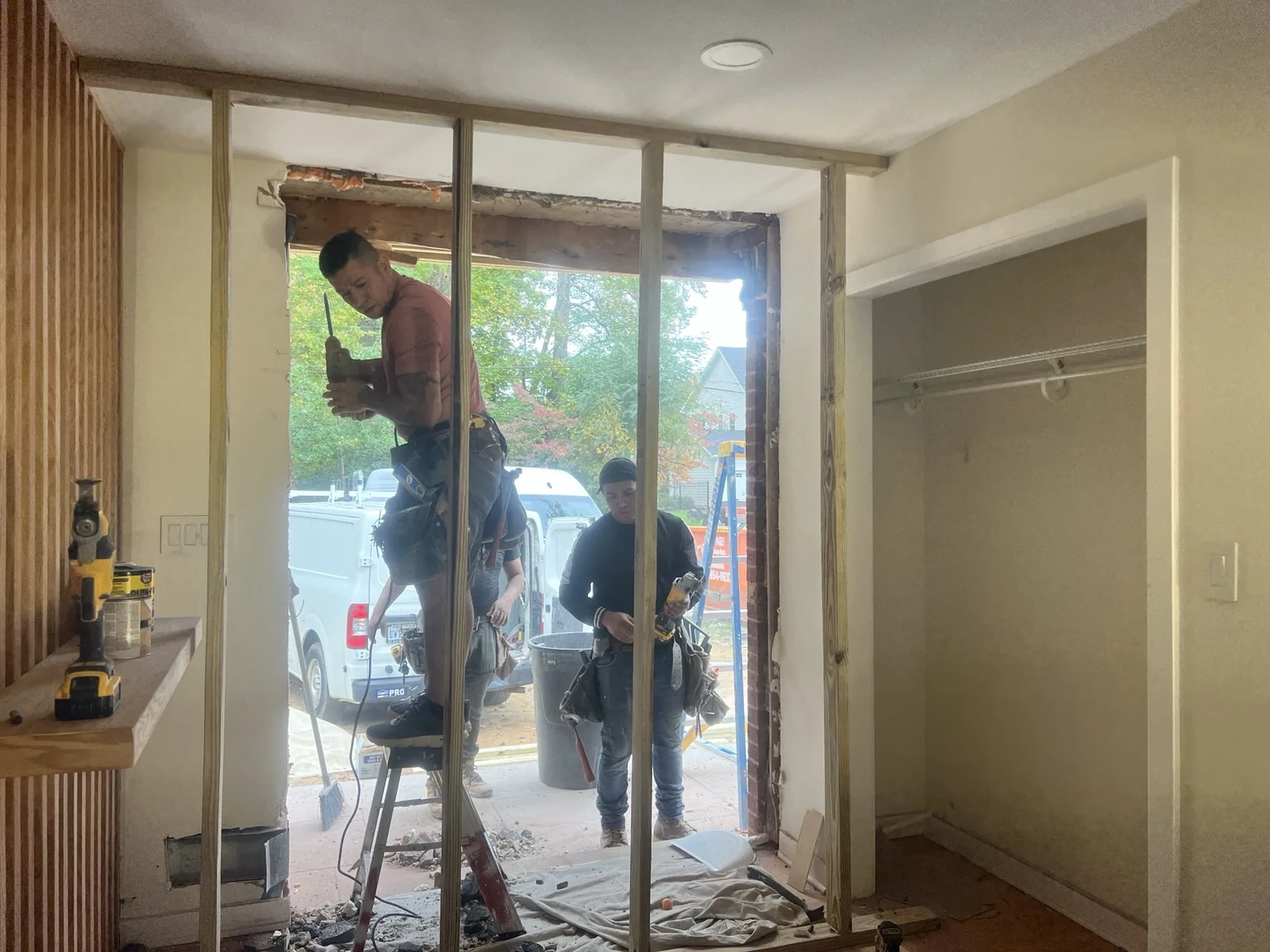
Owner-supplied, independently owned photographs illustrate construction experience; the separate scenes are not represented as a before/after pair or RENOVA Residential LLC contracting records. Service availability depends on licensing, project scope and qualified trade participation.